
 Tiếng Việt
 English
 日本語
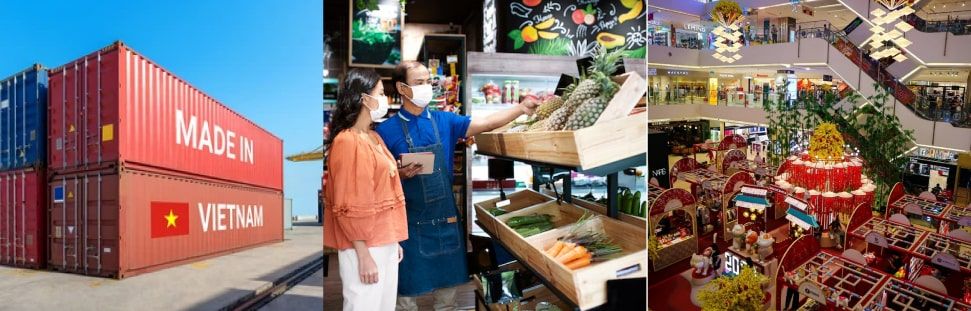
日本語Vietnam's trade has made robust strides over the past decades, especially since the country opened up for international economic integration. Joining international organizations such as the World Trade Organization (WTO) and various Free Trade Agreements (FTAs) has powerfully driven Vietnam's trade, making it one of the fastest-growing economies in Southeast Asia.
Key Factors Contributing to Development
1. Strengthening International Economic Integration
Participating in international organizations and signing Free Trade Agreements (FTAs) has created numerous opportunities for Vietnam's trade. Key agreements include:
- CPTPP Agreement: Expanding export opportunities to major markets such as the US, Japan, Canada, and Australia.
- EVFTA Agreement: Helping Vietnam access the EU market with significant tariff preferences.
- RCEP Agreement: Expanding trade relations with ASEAN countries and major partners.
Thanks to these agreements, Vietnam has not only increased exports but also attracted foreign investment, boosting the development of domestic industries.
2. Export Growth Trends
Vietnam's export trade is developing strongly with key commodities:
- Electronics and Components: Products from major corporations like Samsung and LG contribute significantly to exports.
- Agricultural and Aquatic Products: Items such as rice, coffee, shrimp, and pangasius are Vietnam's strengths.
- Garments and Footwear: Large-scale exports to the US, EU, and Japan.
Total export turnover has grown steadily over many years.
3. Robust Domestic Trade Development
Domestic trade has also seen remarkable growth thanks to:
- E-commerce: Platforms like Shopee, Lazada, and Tiki drive online shopping.
- Retail Network Expansion: Corporations like WinMart, Lotte, and Aeon are developing strongly in densely populated areas.
4. Foreign Investment and Economic Restructuring
Vietnam attracts significant Foreign Direct Investment (FDI), primarily in the following sectors:
- Manufacturing and processing.
- High technology.
- Retail and services.
The increase in investment has helped shift the economic structure from agriculture toward industrialization and modernization.
5. Challenges and Outlook
Although Vietnam's trade is developing strongly, it still faces challenges such as:
- Fierce regional competition.
- Dependence on traditional export industries.
- Sustainable development.
With continuous improvements in the investment environment and trade policies, Vietnam maintains great potential for growth in the future.
Conclusion
Vietnam's trade has achieved extraordinary milestones thanks to international integration, export growth, and domestic trade development. This market holds great potential, especially in technology, consumer goods, and e-commerce. However, it must address challenges to ensure sustainable development and economic diversification.